打击强迫劳动还是绕过国会?剖析特朗普的新关税
【中美创新时报2026年7月27日讯】(记者温友平编译)特朗普政府对 60 多个国家征收了两位数的关税,其法律依据是总统可以对被发现从事“不合理”、“不公正”或“歧视性”贸易行为的国家征收进口税和其他制裁。美联社记者梅·安德森对此作了下述报道。
近日宣布的新关税生效之际,恰逢此前10%的全球临时关税到期。批评人士指出,这些新关税与其说是为了打击强迫劳动,不如说是为了取代之前的关税。而此前的10%临时关税本身,也是最高法院2月份裁定全球关税无效后的临时替代方案。
美国对一些国家征收关税,称这些国家要么没有实施强迫劳动进口禁令,要么未能有效执行该禁令。受影响的国家占美国进口总额的99%,它们迅速提出抗议,称特朗普政府的说法毫无根据且武断,因为在强迫劳动问题上记录迥异的国家却被征收了相同税率的关税。美国花了四个月时间进行调查,但很少透露其确定关税税率(10%或12.5%)的依据。
根据 1974 年《贸易法》第 301 条,美国对那些被美国认定为“未能实施和有效执行禁止进口强迫劳动生产的商品”的国家征收了关税。
在唐纳德·特朗普总统的第一任期内,他援引《宪法》第301条款,对中国进口商品加征全面关税,原因是中美两国就北京挑战美国技术主导地位的强硬策略存在争端。美国还利用《宪法》第301条款的权力,反制其所称的中国在造船业的不公平做法。
“301条款允许在不经国会解决争端的情况下,永久性地征收关税,”纽约法学院国际法中心联合主任、法学教授巴里·阿普尔顿说。“这就是这一切的症结所在。总统不想敲国会的正门,所以他想尽一切办法,从各个角落和任何可能被钻空子的地方进入国会。”
几乎没有证据表明各国未能执行进口禁令
美国贸易代表办公室 (USTR) 表示,已与所有 60 个受调查经济体进行磋商,举行了两轮公开听证会,征集了 2100 多条公众意见,并与其贸易伙伴就其为打击强迫劳动禁令所采取的措施进行了“接触”。
报告并未详细说明与这些国家的会谈内容,称这些会谈属于机密。专家表示,调查一个国家是否实施了禁令相对容易,但要确定各国政府未能执行进口禁令的确切理由却十分困难。
“这方面并没有太多确凿的证据,”卡托研究所(一家自由主义智库)负责一般经济和贸易政策的副总裁斯科特·林西科姆说。“认为像欧洲国家、挪威或瑞士这样的国家在打击强迫劳动方面做得不够,这本身就很可笑。”
霍兰德·奈特律师事务所合伙人、前美国贸易官员帕特里克·奇尔德里斯律师表示,即使各国确实颁布并执行了美国希望的强迫劳动进口禁令,它们仍然需要证明它们正在按照华盛顿的要求执行这些禁令,之后关税才会被取消。
“这表明,短期内全国范围内都不可能找到摆脱新的 301 条款关税的途径,”他说。
各国和各行业都反对强迫劳动的说法
许多国家对特朗普政府的调查结果提出了异议。
巴西面临12.5%的强迫劳动关税,称美国的举动“武断且毫无道理”。巴西在一份声明中表示,美国“选择操纵一个对人权和全球工人斗争至关重要的问题,以此指责59个国家和欧盟存在不公平做法”。
澳大利亚也对征收 12.5% 的关税提出了质疑。
“我们相信,在世界各国中,澳大利亚确实认真对待奴隶制、现代奴隶制问题,并将继续这样做,”贸易部长唐·法雷尔在阿德莱德告诉记者。
一些行业对豁免条款感到不满。自称代表美国纺织业的全国纺织组织理事会(NCTO)抗议一项机制,该机制根据孟加拉国、柬埔寨、印度尼西亚和马来西亚从美国进口棉花和纺织品的情况,豁免了这些国家纺织品和服装进口的301条款关税。
“没有哪个行业比美国纺织业受强迫劳动的影响更大,该行业雇佣了45.3万名工人,并在过去两年多的时间里失去了41家工厂,”全国纺织组织联盟(NCTO)首席执行官金·格拉斯在一份声明中表示。“我们仍然强烈担心,美国贸易代表办公室的纺织业机制会损害政府试图帮助的国内制造商。”
美国的强迫劳动禁令并非总是奏效
美国有两项与强迫劳动产品进口禁令相关的主要法律。1930年的《关税法》赋予海关和边境保护局权力,可以扣押涉嫌使用强迫劳动的货物,并阻止进一步进口。但该法存在一个很大的漏洞:如果存在“消费需求”,即国内供应不足以满足需求,则无论产品是如何生产的,都允许进口。2016年生效的《贸易便利化和贸易执法法》堵住了这个漏洞。
2021年,《维吾尔族强迫劳动预防法》获得通过。该法禁止从中国新疆地区进口商品,除非企业能够证明这些商品并非由强迫劳动生产。
但用强迫劳动生产的商品仍然可以流入美国。2015年,美联社的一项调查发现,东南亚的渔业中使用了奴隶劳动。他们捕捞的海鲜最终流入了美国各地的超市和宠物食品供应商。
美联社2020年的一项调查揭露了价值650亿美元的棕榈油产业中存在的劳工虐待问题,该产业涉及亚洲数百万名男性、女性和儿童,他们被隐形的劳动群体所剥削。他们采摘的棕榈果最终进入了联合利华、欧莱雅、雀巢和宝洁等大型企业的供应链。
呼吁采取更全面的方法打击强迫劳动
在本月举行的关税听证会上,代表商业联盟“联合协会强制劳动工作组”出席听证会的全国零售联合会副主席乔纳森·戈尔德表示,为了使进口禁令发挥作用,这些禁令必须更加广泛。
他表示,各国需要有与关税挂钩的“明确、可衡量的基准”,美国应该帮助各国建立执法计划。
博伊斯·席勒·弗莱克斯纳律师事务所的合伙人肯尼亚·戴维斯表示,有效的禁令需要“全面的方法”,既要保证调查内容的透明度,又要提供援助各国执行禁令的方案。
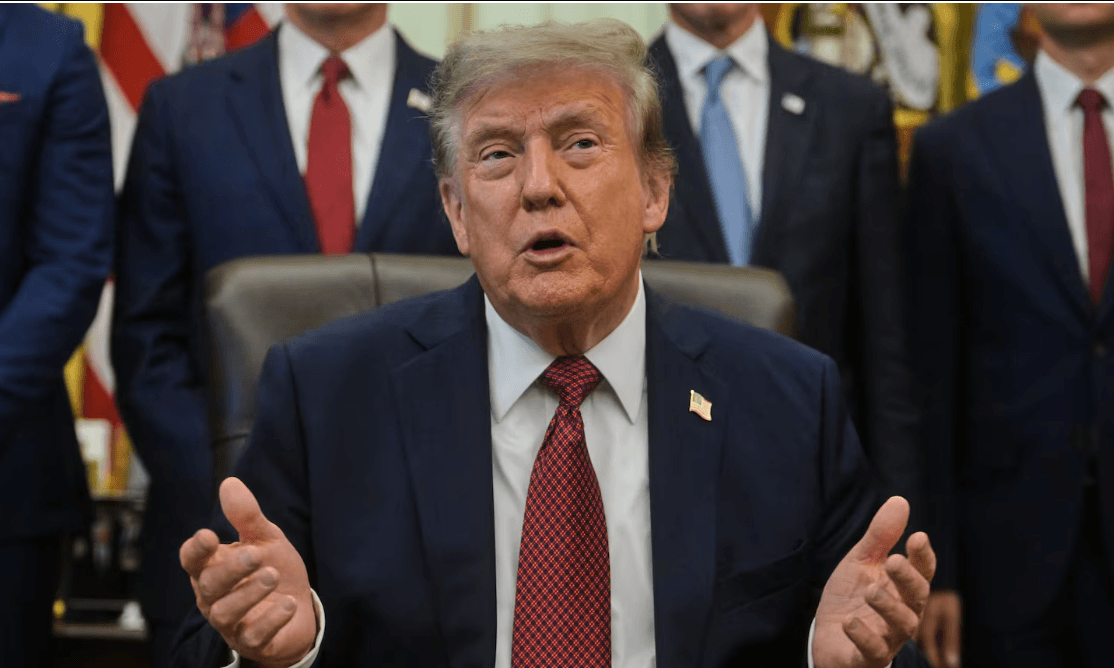
题图:2026年7月24日,美国总统唐纳德·特朗普在华盛顿白宫椭圆形办公室发表讲话。图片来源:Rod Lamkey/AP Photo/Rod Lamkey
附原英文报道:
A forced-labor crackdown or an end-run around Congress? Dissecting Trump’s new tariffs
By MAE ANDERSON The Associated Press,Updated July 26, 2026
President Donald Trump speaks in the Oval Office of the White House, on July 24, 2026, in Washington.Rod Lamkey/AP Photo/Rod Lamkey
NEW YORK (AP) — The Trump administration has imposed double-digit tariffs on more than 60 countries, using a legal justification that permits the president to levy import taxes and other sanctions against countries found to engage in “unjustifiable,” “unreasonable” or “discriminatory” trade practices.
The new tariffs announced in recent days take effect just as temporary 10% worldwide tariffs expired, and critics say they are less about cracking down on forced labor than they are a way to replace those tariffs. The expired tariffs were themselves a temporary replacement for worldwide tariffs the Supreme Court struck down in February.
The tariffs were levied on countries that the U.S. says either don’t have or don’t effectively enforce a forced-labor import ban. The affected countries, which account for 99% of U.S. imports, were quick to protest, calling the Trump administration’s claims unfounded and arbitrary, as nations with vastly different records on forced labor received the same tariff level. The U.S. spent four months investigating but gave few details on how it arrived at the tariff rates, which are either 10% or 12.5%.
The tariffs were levied under Section 301 of the Trade Act of 1974 on countries that the U.S. determined had failed “to impose and effectively enforce a prohibition on the importation of goods produced with forced labor.”
During President Donald Trump ‘s first term, he cited Section 301 to impose sweeping tariffs on Chinese imports amid a dispute over the sharp-elbowed tactics Beijing was using to challenge America’s technological dominance. The U.S. is also using 301 powers to counter what it calls unfair Chinese practices in the shipbuilding industry.
“The 301s allow a permanent tariff without going to Congress to settle the dispute,” said Barry Appleton, a law professor and co-director of New York Law School’s Center for International Law. “That’s what all of this is about. The president doesn’t want to knock on the front door of Congress, so he’s trying every side door and every unlatched window to get in.”
Little evidence that countries failed to enforce import bans
The office of the United States Trade Representative (USTR) said it consulted with all 60 economies under investigation and held two rounds of public hearings, elicited more than 2,100 public comments, and had “engagement” with its trading partners about what they were doing to combat forced labor bans.
It didn’t detail its talks with the countries, saying those were confidential. Experts say it is fairly straightforward to investigate whether a country has a ban or not, but it is difficult to determine the government’s exact rationale for each country’s failure to enforce import bans.
“There’s not a lot of hard evidence there,” said Scott Lincicome, vice president for general economics and trade policy at the Cato Institute, a libertarian think tank. “It’s pretty laughable on its face to think that a country like the ones in Europe or in Norway or Switzerland aren’t doing enough to police forced labor.”
And even if countries do enact and enforce the forced-labor import bans the U.S. wants, they would still need to prove that they’re enforcing them to Washington’s satisfaction before the tariffs would be removed, said lawyer Patrick Childress, a partner at Holland & Knight and a former U.S. trade official.
“This suggests that no short-term path for countrywide relief from the new Section 301 tariffs will be available,” he said.
Countries and industries reject the forced labor argument
Many countries have pushed back against the Trump administration’s findings.
Brazil, which faces a 12.5% forced-labor tariff, called the U.S. move “arbitrary and unjustified.” The U.S. “chose to manipulate an issue of great importance to human rights and the struggles of workers worldwide in order to accuse 59 countries and the European Union of unfair practices,” it said in a statement.
Australia also questioned the justification for its 12.5% tariff.
“We believe that amongst all of the countries in the world, Australia does take the issue of slavery, modern slavery, seriously, and will continue to do that,” Trade Minister Don Farrell told reporters in Adelaide.
Carve-outs have riled some industries. The National Council of Textile Organizations (NCTO), which describes itself as the voice of the American textile industry, protested a mechanism that exempts the Section 301 tariffs for textile and apparel imports from Bangladesh, Cambodia, Indonesia, and Malaysia based on those countries’ imports of U.S. cotton and textiles.
“No other industry has been more disadvantaged by forced labor than the U.S. textile industry, which employs 453,000 workers and has lost 41 plants over the past two plus years,” NCTO chief executive Kim Glas said in a statement. “We remain strongly concerned that USTR’s textile mechanism will harm the very domestic manufacturers the administration seeks to help.”
US forced-labor bans don’t always work
The U.S. has two major pieces of legislation related to forced-labor import bans. The Tariff Act of 1930 gave Customs and Border Protection the authority to seize shipments where forced labor was suspected and to block further imports. But it had a big carve-out: If there was “consumptive demand,” meaning there wasn’t sufficient supply to meet domestic demand, imports were allowed regardless of how they were produced. The Trade Facilitation and Trade Enforcement Act that took effect in 2016 eliminated that loophole.
In 2021, the Uyghur Forced Labor Prevention Act was passed. It blocks imports from China’s Xinjiang region unless businesses can prove the items were made without forced labor.
But goods made with forced labor can still make it into the U.S. In 2015, an Associated Press investigation found that slave labor was used in the fishing industry in Southeast Asia. The seafood they caught made its way to supermarkets and pet food providers across the U.S.
An investigation by The Associated Press in 2020 into the $65 billion palm oil industry found labor abuses among an invisible workforce consisting of millions of men, women and children in Asia. The fruit they harvested made its way into the supply chains of major companies, including Unilever, L’Oreal, Nestle and Procter & Gamble.
Calls for a more comprehensive approach to combat forced labor
During hearings on the tariffs this month, National Retail Federation vice president Jonathan Gold, who was representing the business coalition the Joint Association Forced Labor Working Group at the hearing, said that in order for the import bans to work, they would have to be much more extensive.
He said there need to be “clear, measurable benchmarks” tied to tariffs for countries to hit, and that the U.S. should help countries build enforcement programs.
Kenya Davis, a partner at the Boies Schiller Flexner law firm, said an effective ban needs a “comprehensive approach” that provides transparency about what the investigations consisted of, along with programs that provide countries aid in enforcing bans.