
7月生效的新学生贷款政策可能会使数百万借款人更难负担大学学费
【中美创新时报2026年5月10日讯】(记者温友平编译)今年夏天,联邦学生贷款格局将发生巨大变化。学校和家庭正在努力填补由此产生的资金缺口。《波士顿环球报》记者迪蒂·科利和玛拉·卡达斯-尼尔森对此作了下述报道。
几十年来,联邦政府已投入数万亿美元用于学生贷款,帮助数百万美国人上大学。
如今,华盛顿的慷慨大方发生了近几十年来最深远的变化。
特朗普政府通过削减贷款项目和限制研究生贷款额度,正在缩减许多家庭赖以应对不断上涨的大学学费的援助。目前已有近800万借款人违约,白宫认为这些举措将有助于遏制美国的学生债务危机,并迫使学校降低学费。
这些变化将于7月生效 ,届时学生和大学都将争相为下一学年筹集资金。
研究生助学贷款项目(PLUS Loan Program)已被彻底取消,本科生的多项低成本债务偿还计划也同样被取消。大多数学生债务人将被纳入一项新的还款援助计划(Repayment Assistance Plan),该计划将根据他们的收入计算还款额。
家长每年只能借贷2万美元,而不是全部学费。攻读法律和医学研究生学位的贷款总额上限为20万美元,其他专业学位的贷款总额上限为10万美元。
这种转变将导致大学学费与家庭支付能力之间出现巨大差距。总部位于波士顿、专门为医疗保健领域提供贷款的初创公司Clasp表示,今年全美学生在支付学费方面面临着68.5亿美元的资金缺口。
一些专家担心,许多潜在的申请者,特别是那些来自低收入家庭或攻读收入较低的学位的人,可能会完全放弃上大学。
“联邦学生贷款计划旨在确保所有学生无论家庭状况如何——财富、种族、居住地邮政编码——都能接受高等教育,”学生贷款倡导组织“保护借款人”(Protect Borrowers)的副执行主任珀西斯·于(Persis Yu)表示,“但有些人最终将完全无力承担高等教育的费用。”
白宫表示, 大多数研究生不会因新的贷款上限而遇到困难。教育部副部长尼古拉斯·肯特认为,这些改革总体上是“持久性政策”,最终将降低从职业培训到博士学位等各个层次的大学教育成本。
专家表示,新的限制措施预计将促使更多家庭转向私人贷款机构。 但这些贷款往往利率更高,而且更难获得。费城联邦储备银行去年12月的一项分析显示,鉴于研究生的信用记录,超过三分之一的研究生如果没有担保人可能无法获得私人贷款。
这与过去25年政府对学生的贷款规模不断增长的情况截然不同。21世纪初,大量新的贷款产品涌现,越来越多的高校除了联邦贷款外,还设立了校内奖学金。
然而与此同时,学费却上涨了近80%。没有任何迹象表明学校准备降低学费,反而寄希望于家境富裕的学生支付全额学费。
如今,大约三分之二的学生为了上大学至少会贷款一部分钱。
在新冠疫情期间,学生债务问题成为政治焦点。拜登政府暂停了贷款偿还,并扩大了债务减免计划,以帮助许多借款人。但随着特朗普连任,白宫和共和党控制的国会 削减了联邦政府对高等教育的支持,包括去年税改法案中涉及的大学贷款市场改革。
马萨诸塞州的数据显示,研究生贷款额度上限将影响约4000名学生。今年3月,州长莫拉·希利曾警告称,此举可能导致部分学生背负更昂贵的贷款,并可能加剧劳动力短缺问题。
在校园里,助学金办公室的工作人员已经要处理更多的问题了。
波士顿学院研究生招生、学生服务和助学金助理院长肖恩·森德尔表示,未来的护理专业学生都在问:“我该如何支付学费?我该如何筹集生活费?”
各大学正在努力寻找解决方案。一些大学——例如耶鲁大学和雷吉斯学院——正在与私人贷款机构建立合作关系,而另一些大学则在考虑“风险共担”方案,本质上是为那些可能不符合贷款资格的学生共同签署私人贷款协议。(在这种模式下,学生支付初始费用,而学校则预留资金以在学生违约时偿还借款人。)
夏威夷大学推出了一项零利率贷款计划,类似于新泽西州一项面向追求热门职业的学生的低成本贷款计划。 今年秋季,堪萨斯大学将利用其捐赠基金为法学院学生提供低息贷款。
康涅狄格州高等教育补充贷款管理局是一家隶属于该州的非营利性贷款机构,希望在下一个学年提供 3000 万美元的研究生贷款,尽管其要求将比联邦贷款更严格。
“我们希望尽可能填补融资缺口,”康涅狄格州贷款机构副主任乔什·赫洛克说。
塔夫茨大学正考虑将其面向国际关系研究生项目中成绩优异的国际学生的贷款项目扩展至美国学生。该项目提供最高2.5万美元的学费贷款,资金来源于校友捐款。此外,该校还安排用人单位赞助神经科学、药理学及其他三个领域的博士生。
“这将是我们所有人持续面临的问题:如何让我们的项目尽可能地经济实惠?”塔夫茨大学校长苏尼尔·库马尔说道。
市场对Clasp这类初创公司的需求也在增长,该公司为即将毕业的医护专业学生安排贷款。这家初创公司将毕业生与愿意为学生偿还高达18万美元学生贷款(作为员工福利)的医院联系起来。
“这样一来,人才就能获得切实的经济支持,雇主也能从中受益,”Clasp创始人苔丝·迈克尔斯说。“我们不希望有人因为缺乏机会而辍学。”
马萨诸塞州已为居民提供每年最高 4,000 美元的无息贷款项目,并为教师和幼儿教育工作者 提供贷款偿还援助。自 2022 年以来,该州已将其对大学生的助学金增加了一倍。然而,教育政策非营利组织希尔德雷斯研究所最近的一份报告指出,马萨诸塞州还需要额外提供 8400 万美元才能满足所有援助需求。
“收入越低,未满足的需求就越多,”该研究所研究主任杰里米·汤普森说。“扩大助学金固然很好,但这还远远不够。”
希尔德雷斯计算得出,例如,一个家庭年收入为 6 万美元的学生,平均而言会有 1 万美元的开支(房租、书籍、食物),而这些开支无法通过目前州政府的援助水平来支付 。
尽管 许多高等教育倡导者担心联邦贷款削减的后果,但其他替代方案还是带来了一些希望。
麻省总医院健康职业学院的护理课程,是众多试图帮助研究生应对学生贷款新上限的当地院校之一。
Clasp 的创始人迈克尔斯表示,该公司已从马萨诸塞州和其他地区的医院获得了价值 1.3 亿美元的学生贷款偿还承诺。
这帮助了像布莱恩·霍普金斯这样的学生,他曾在马萨诸塞湾社区学院学习成为一名X光技师。去年秋天,克拉普将他与波士顿儿童医院联系起来,医院承诺聘用他并替他偿还37500美元的贷款——而此时距离他完成学业还有六个月的时间。
“我原本打算贷款十年,利率6%。”46岁的霍普金斯说,“我为此感到非常焦虑和担忧,甚至有些害怕。我已经15年没有负债了。”
根据 Clasp 达成的协议,波士顿儿童医院每月将为他支付 1,562.50 美元的贷款。
霍普金斯的情况确实如此,但他知道这未必适用于所有人。目前,非医疗保健行业的本科生和负债者没有资格通过Clasp获得援助。
“我知道,”他说,“这些学生贷款很快就会让人不堪重负。”
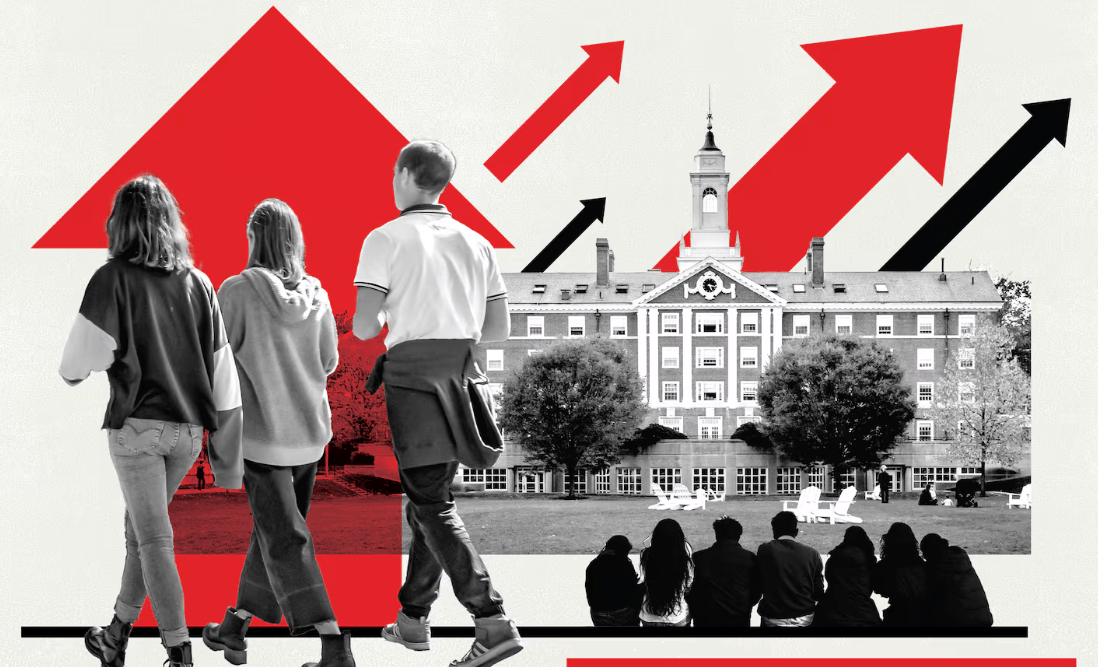
题图:Ryan Huddle \ Globe staff
附原英文报道:
New student loan changes taking effect in July could make college less affordable for millions of borrowers
The federal student loan landscape will change dramatically this summer. Schools and families are working to plug the hole left behind.
By Diti Kohli and Mara Kardas-Nelson Globe Staff,Updated May 8, 2026
Ryan Huddle \ Globe staff
For decades, the federal government has pumped trillions into student loans, helping millions of Americans go to college.
Now, in the most far-reaching changes in a generation, Washington has tempered its largess.
Through a combination of cuts to loan programs and new caps on borrowing by graduate students, the Trump administration is scaling back the assistance many families tap to bridge the ever-rising costs of college. With nearly 8 million borrowers already in default, the White House believes the moves will help rein in the nation’s student debt crisis and pressure schools to lower tuition.
The changes take effect in July, leaving students and universities alike scrambling to nail down funding for the next academic year.
The Plus loan program for graduate schools has been eliminated outright, as have multiple low-cost debt repayment plans for undergraduates. Most student debtors will be funneled to a new Repayment Assistance Plan that calculates their payments based on their incomes.
Parents will also be able to borrow only $20,000 each year, rather than the full cost of attendance. Loans for graduate school will be capped at $200,000 in total borrowing for those studying law and medicine, and $100,000 for other professional degrees.
The shift will leave a yawning gap between the cost of college and what families can pay. According to Boston-based startup Clasp, which facilitates loans in the health care field, students nationwide are facing a $6.85 billion shortfall in meeting the tuition bills this year.
Some specialists worry a number of prospective applicants, especially those from lower-income backgrounds or who are pursuing less remunerative degrees, may skip going to college altogether.
“The federal student loan program was designed to ensure access to college regardless of a family situation — wealth, race, ZIP codes,“ said Persis Yu, deputy executive director of the student loan advocacy group Protect Borrowers. “Some people are just going to be priced out of higher education altogether.”
The White House said the majority of graduate students will not run into difficulties with the new loan caps. Education undersecretary Nicholas Kent sees the changes overall as “durable policies” that will ultimately lower the cost of college at every level, from vocational training to PhDs.
The new limits are expected to prompt more families to turn to private lenders, experts said. But those loans tend to be come with higher interest rates and can be harder to access. More than one-third of graduate students may not be eligible for a private loan without a cosigner, given their credit histories, according to an analysis from the Federal Reserve Bank of Philadelphia in December.
It’s a stark shift after the last quarter-century, when government lending to students grew and grew. A raft of new loan options launched in the early 2000s, and more colleges supplemented federal loans with school-funded scholarships.
Yet, at the same time, tuition costs have ballooned by roughly 80 percent. There’s no sign schools are preparing to lower the sticker price of attendance, instead hopeful that wealthier students will shell out full-price.
Today, roughly two-thirds of students borrow at least some money for college.
Student debt became a political flashpoint during the COVID pandemic, when the Biden administration paused loan repayments and expanded initiatives to forgive the debts of many borrowers. But with the election of Trump to a second turn, the White House and a Republican-led Congress scaled back federal support for higher education, including changes to the college loan market that were part of the tax bill passed last year.
In Massachusetts, the caps on graduate loans will affect roughly 4,000 students, state figures show. In March, Governor Maura Healey warned that could drive some to take on more expensive loans, and also could worsen workforce shortages.
On campuses, financial aid officers are already handling a lot more questions.
At Boston College, Sean Sendall, assistant dean of graduate enrollment, student services, and financial aid said prospective nursing students are asking: “How am I going to pay for this? How do I find the funds for living expenses?”
Universities are trying to piece together solutions. Some — Yale University and Regis College, for example — are forging partnerships with private lenders, and others are considering “risk sharing” options, essentially cosigning private loans for students who might otherwise not qualify. (In this model, students pay the initial fees, while schools set aside money to cover borrowers in case of default.)
The University of Hawaii debuted a zero-interest loan program, similar to a low-cost loan initiative in New Jersey for students pursuing in-demand positions. This fall, the University of Kansas will tap its endowment to offer lower-interest loans to law students.
The Connecticut Higher Education Supplemental Loan Authority, a nonprofit lender affiliated with the state, hopes to provide $30 million in graduate loans for the next school year, although they will have stricter requirements than federal loans.
“We want to fill as much of the financing gap as we can,” said Josh Hurlock, deputy director of the Connecticut lender.
Tufts University is considering expanding a loan program for high-achieving international students in its graduate international relations program to include students from the United States. It loans up to $25,000 for tuition costs, funded by alumni donations. In other doctorate programs, the school arranges for employers to sponsor students in neuroscience, pharmacology, and three other fields.
“This is going to be an ongoing issue for all of us: the question of, how do we make our programs as affordable as possible?” said Tufts president Sunil Kumar.
Demand is also growing for startups such as Clasp, which arranges loans for health care students nearing graduation. The startup connects graduates to hospitals willing to pay up to $180,000 of student debt as an employee benefit.
“This way, the talent is getting meaningful financial support, and the employers are better off,” said Clasp founder Tess Michaels. “We don’t want people dropping out because of access.”
Massachusetts already has a no-interest loan program for up to $4,000 per year for residents and provides loan repayment assistance for teachers and early childhood educators. Since 2022, the state has doubled its financial aid contributions to college students. Yet, a recent report from the education policy nonprofit Hildreth Institute found Massachusetts would need to provide another $84 million to meet all the demand for assistance.
“Lower down the income ladder, you have higher levels of unmet need,” said Jeremy Thompson, the institute’s director of research. “This financial aid expansion is great, but it does not go far enough.”
For example, a student whose family earns $60,000 would have, on average, $10,000 in expenses — rent, books, food — that would not be covered by current levels of state assistance, Hildreth calculated.
Though many higher education advocates fear the consequences of the pullback in federal loans, there is some promise in alternative options.
Clasp, for instance, has garnered $130 million worth of student loan payment commitments from hospitals in Massachusetts and elsewhere, its founder Michaels said.
That’s helped students such as Brian Hopkins, who studied to be an X-ray technologist at Massachusetts Bay Community College. Last fall, Clasp connected him with Boston Children’s Hospital, which promised to hire him and pay his $37,500 in loans — six months before he even finished his program.
“I was going to have a 10-year plan with 6 percent interest,” said the 46-year-old Hopkins. “I had a lot of stress and worry about it. I had fear. I hadn’t had debt in 15 years.”
Under the arrangement through Clasp, Boston Children’s will pay $1,562.50 toward his loan each month.
It worked out for Hopkins, but he knows it might not for everyone. Undergraduates and debtors outside of health care are not currently eligible for assistance through Clasp.
“I know,” he said, “these student loans balloon on people so quick.”