
马萨诸塞州高房价加剧了持续存在的种族财富差距
【中美创新时报2026年8月15日讯】(记者温友平编译)马萨诸塞州不断上涨的房价让人们的生活变得艰难。但波士顿联邦储备银行一份具有里程碑意义的新报告显示,该州高昂的房价还有另一个有害的影响:维持甚至可能 加剧 了该州根深蒂固的种族财富差距。《波士顿环球报》记者安德鲁·布林克对此作了下述报道。
这份于周三发布的报告更新了2015年一项臭名昭著的研究,该研究发现,在美国出生的波士顿黑人的净资产中位数仅为8美元。最新报告发现,马萨诸塞州的房主(其中大多数是白人)的财富远远高于租房者,这主要是因为他们拥有房产净值,而这反过来又加剧了财富差距。
“我们知道,在这个国家,拥有住房仍然是积累代际财富的主要途径,”马萨诸塞州经济适用房联盟执行主任西蒙妮·克劳福德说。“但获得住房的机会从来都不是平等的。而且,我们拥有全国最高的房价之一,并且房价还在上涨,无论我们如何谈论缩小差距,这种差距只会加剧。”
在美国,拥有房产长期以来一直是积累财富的主要途径。长期抵押贷款相对容易获得,使得购房者能够在数十年内分期付款购买宝贵的资产。然而,对于租房者来说,这却陷入了一个恶性循环:由于租金飙升,许多人无法攒够购房首付;同时,由于住房支出实际上是无法收回的资金,他们也无法通过房屋净值积累财富。事实上,超过60%的租房者甚至连搬进新公寓的前期费用都负担不起,更不用说支付房屋首付了。
研究发现,结果显示,马萨诸塞州房主的净资产中位数为 790,500 美元,而租房者的净资产中位数仅为 1,500 美元。
在这个州,黑人和拉丁裔家庭的住房拥有率远低于白人家庭,这在一定程度上解释了财富差距。根据美国人口普查数据,该州约有70%的白人家庭拥有住房,而黑人家庭和拉丁裔家庭的住房拥有率分别为39%和32%。
不同种族家庭的净资产中位数也存在类似的巨大差距。美联储最新报告显示,马萨诸塞州的拉丁裔家庭和黑人家庭的净资产中位数分别仅为1200美元和7800美元,而白人家庭的净资产中位数则高达549200美元。
“这些差距与几十年前马萨诸塞州盛行的种族歧视性贷款政策密切相关,”金融公平伙伴关系组织执行主任汤姆·卡拉汉表示。诸如“红线区”之类的政策——即银行拒绝向少数族裔人口众多的社区发放住房贷款——意味着黑人和西班牙裔家庭基本上被排除在二战后住房拥有率的繁荣之外。而同样的繁荣却使许多工薪阶层的白人家庭跻身中产阶级。
卡拉汉说:“我们今天所看到的种族住房拥有率差距,与数十年来阻止有色人种家庭购买房屋的种族主义住房政策之间存在直接联系。”
当然,财富差距的背后远不止住房拥有率的差异。诸如“红线区”之类的政策也产生了更广泛的影响,例如造成收入隔离的社区,以及人们获得优质公共教育资源的不平等。这些因素叠加起来,导致高薪工作机会匮乏,再加上招聘中的歧视,长期以来使得有色人种居民更难实现经济地位的提升。
但克劳福德表示,黑人和西班牙裔家庭大多错过了购房热潮,而这场热潮为许多白人居民带来了世代财富,“他们从此一直在努力追赶”。
研究显示,马萨诸塞州约有40%的租房家庭净资产为零或为负,而拥有住房的家庭中只有1%属于这种情况。美联储的研究还发现,约有60%的租房家庭无法用现金或等价物支付400美元的紧急开支,而拥有住房的家庭中只有20%的人面临这种情况。
原因很容易理解。
拉肖恩达·沃森是四个孩子的母亲,她从小就了解到,在布伦特里就读METCO学校期间,她亲眼目睹了马萨诸塞州财富分配的极度不均。她说, 她亲眼看到了富裕家庭的孩子是如何生活的。
如今,沃森作为一名理财顾问,年收入6.3万美元。但她每月在兰多夫的房租是3179美元, 加上女儿的大学学费、学生贷款和信用卡债务,她仍然入不敷出。买房的梦想对她来说遥不可及。
“对我们很多人来说,我们感觉自己工作只是为了支付账单,”45岁的沃森说。“我们被承诺的追求幸福在哪里呢?”
美联储 2015 年的报告使许多政治领导人更加关注种族财富差距问题,从而推动了许多新的政策举措、贷款计划和研究。
尽管做出了种种努力,但同期当地房价却飙升,或许抵消了所有实质性的收益。据马萨诸塞州房地产经纪人协会的数据显示,2016年6月,马萨诸塞州独栋住宅的中位价为38万美元。到2026年6月,这一数字飙升至71.5万美元,涨幅高达88%。
克劳福德指出,房价飙升带来的诸多影响中,有两个显著的事实:首先,它增加了现有房主的财富,而这些房主大多是白人。报告显示,该州房主的房屋净值中位数约为41.5万美元,使其成为个人总财富的最大组成部分。
房价上涨也大幅增加了家庭购房所需的收入,这对黑人和西班牙裔家庭的影响尤为严重。
克劳福德说:“有一代黑人和拉丁裔家庭,他们的父母无力购房致富。当一代人被拒之门外时,他们的孩子起步就更加落后。”
相关报道:永远的租房者:对于大波士顿地区的许多人来说,拥有住房的美国梦“已不复存在”
克劳福德表示,州政府、市政当局和非营利组织已投入数千万美元用于为首次购房者提供首付援助或降低抵押贷款利率的项目,这是缩小种族财富差距的关键策略。
这些项目虽然有限,但确实有效。金融公平伙伴关系组织发现,2022年发放给黑人和拉丁裔购房者的抵押贷款份额大致与其在总人口中的份额相等,这是一个进步的迹象。
但是,房价越高,购买一套房子所需的资金就越多,这意味着购房援助计划在目前的资金水平下只能发挥一定的作用。
疫情期间,该州曾短暂地将联邦紧急资金用于这些项目,这最终促成了首次购房者数量的增长。但此后,这笔额外资金已经枯竭。克劳福德表示,要真正解决种族财富差距问题,就应该加强这些项目,从而创造更多首次购房机会,而不是仅仅关注增加租房机会。她认为,仅仅关注增加租房机会可能会造就“一代没有房屋净值的租房者”。
马萨诸塞州住房合作组织执行主任雷切尔·海勒表示,另一项关键策略是填补该州住房严重短缺的问题。
马萨诸塞州的住房短缺导致房价和租金飙升。这也造成了市场上为数不多的房屋之间竞争异常激烈,使得购房更加困难。
海勒表示,“马萨诸塞州住房严重短缺,导致租金和房价飙升至天文数字般的水平”,从而加剧了不平等。
当然,种族财富差距不仅仅体现在住房拥有率上。改善社区获得优质工作、医疗保健和教育的机会也有助于财富积累。但克劳福德表示,解决这个问题最终需要多年持续的投资,旨在“让那些家庭曾经被剥夺了住房权的人也能拥有自己的住房”。
“我希望在某个时候,我们能够明白,如果我们不开始真正投资解决这个问题,我们的经济将无法养活低收入和中等收入人群,”她说。“这就是我们正在走向的,或者说我们已经身处其中的境地。”
《环球报》记者凯蒂·约翰斯顿对本报道亦有贡献。
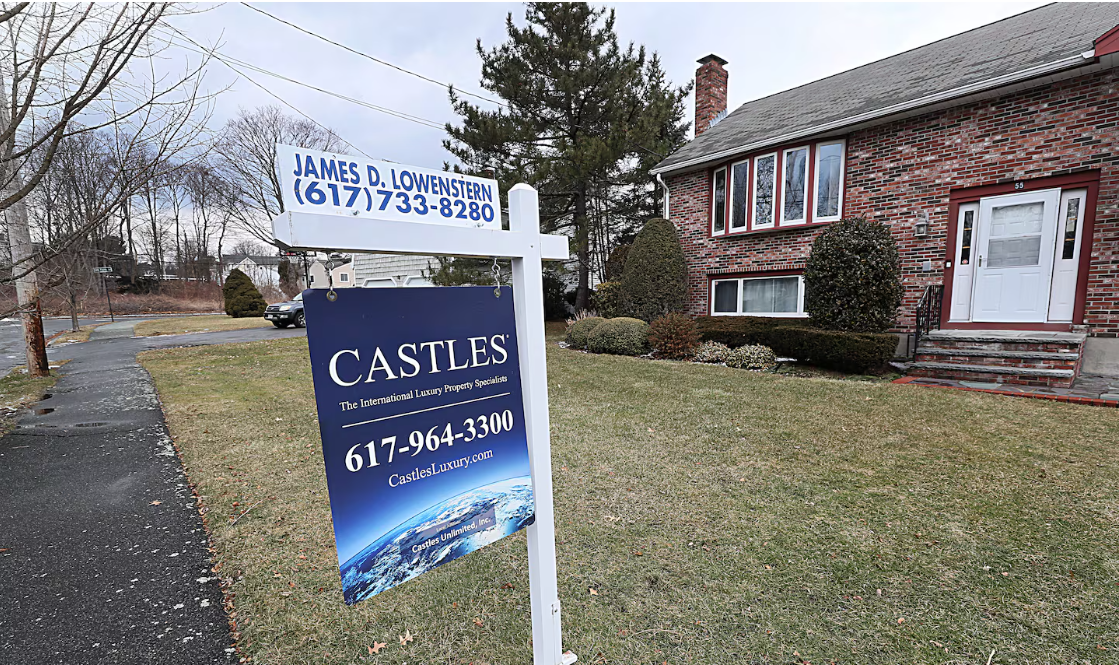
题图:2022年,牛顿市一处待售房屋。苏珊娜·克雷特/《环球报》工作人员/档案照片
附原英文报道:
In deeply unequal Massachusetts, high home prices have helped fuel persistent racial wealth gap
By Andrew Brinker Globe Staff,Updated August 14, 2026
A home for sale in Newton in 2022. Suzanne Kreiter/Globe Staff/file
Massachusetts’ ever-rising house prices make life difficult. But a new landmark report from the Federal Reserve Bank of Boston shows this state’s lofty housing prices have another pernicious effect: maintaining, or perhaps even deepening, the state’s stubborn racial wealth gap.
The report, released Wednesday, updated an infamous 2015 study that found US-born Black Bostonians had a median net wealth of just $8. The latest report finds homeowners in Massachusetts — the majority of whom are white — have vastly more wealth than renters, largely because of the equity in their properties, that in turn fuels the wealth gap.
“We know that homeownership is still the primary vehicle for building generational wealth in this country,” said Symone Crawford, executive director of the Massachusetts Affordable Housing Alliance. “Access to it has never been equal. And the fact that we have some of the highest home prices in the country, and that those prices are still rising, is only compounding that gap, no matter how much we talk about closing it.”
Homeownership has long been the primary key to wealth building in the United States. The relative accessibility of long-term mortgages allows buyers to pay for valuable assets over the course of decades. But in what has become a vicious cycle for tenants, many can’t save for a down payment on a house because of soaring rent prices, and yet they can’t build wealth through home equity because their housing expenses are effectively money they will not get back. In fact, more than 60 percent of renters here don’t have the money for even the upfront costs to move into a new apartment, let alone a down payment on a house.
The result is a gap that shows the median net wealth for homeowners in Massachusetts is $790,500, and just $1,500 for renters, the study found.
Black and Hispanic families own their homes at far lower rates than white families in this state, which helps partly explain the wealth gap. Some 70 percent of white households here own their homes, according to US Census data, compared with 39 percent of Black households and 32 percent of Latino households.
The median net family wealth across racial groups is similarly disproportionate. Latino families and Black families in Massachusetts have a median net wealth of just $1,200 and $7,800, respectively, the new Fed report found, while white families have a median net wealth of $549,200.
Those disparities are closely tied to the racist lending policies that were prevalent in Massachusetts decades ago, said Tom Callahan, executive director of the Partnership for Financial Equity. Policies like redlining, the practice by which banks refused to issue home loans in neighborhoods with large minority populations, meant that Black and Hispanic families were largely excluded from the post-World War II boom in homeownership. That same boom vaulted many working-class white families into the middle class.
“There is a direct relationship between the racial homeownership gaps we have today and the decades of racist housing policies that prevented households of color from purchasing homes,” said Callahan.
Of course, there is more behind the wealth gap than disparate homeownership rates. Policies like redlining also had broader effects, such as creating neighborhoods segregated by income and unequal access to strong public education systems. These can compound to create a lack of opportunities for higher-paying jobs that, along with discrimination in hiring, has long made it more difficult for residents of color to move up the economic ladder.
But Black and Hispanic families largely missed out on the homebuying boom that secured generational wealth for many white residents and “have been trying to catch up ever since,” said Crawford.
Indeed, roughly 40 percent of renter families in Massachusetts held zero or negative net wealth, according to the study, compared to just 1 percent of homeowning families. And some 60 percent of renter households could not afford to pay for a $400 emergency expense with cash or a cash equivalent, the Fed study found, compared with just 20 percent of homeowners.
It is easy to understand why.
Lashaunda Watson, a mother of four, learned from a young age how disproportionately wealth is distributed in this state during her time as a METCO student in Braintree. There, she said, she saw how children born into wealthier families lived.
These days, Watson makes $63,000 a year as a financial coach. But between her $3,179 rent in Randolph, her daughter’s college tuition payments, and her student loan and credit card debt, she still finds herself grinding to make ends meet. The prospect of buying a home feels far away.
“For so many of us, we feel like we are working just to pay bills,” said Watson, who is 45. “Where is the pursuit of happiness that we were promised?”
The Fed’s 2015 report sharpened the focus of many political leaders on the racial wealth gap, spurring numerous new policy efforts, lending programs, and studies.
But for all of those efforts, home prices here have exploded over that same period, perhaps offsetting any meaningful gains. In June 2016, the median-priced single-family home in Massachusetts sold for $380,000, according to the Massachusetts Association of Realtors. In June 2026, that figure was $715,000, an 88 percent jump.
Among the many effects from that huge increase in price are two salient facts, according to Crawford: For one, it has grown the wealth of existing homeowners, who are mostly white. Among homeowners in this state, the median home equity was about $415,000, the report found, making it by far the biggest contributor to a person’s overall wealth.
And the rise in home prices has also increased the amount of money a household needs to earn to purchase a home significantly, which has disproportionately affected Black and Hispanic families.
“You have a generation of Black and Hispanic families whose parents were not able to purchase homes and build wealth,” Crawford said. “When one generation is locked out, their children start further behind.”
The state, municipalities, and nonprofits have poured tens of millions of dollars into programs that provide down payment assistance or buy down mortgage rates for first-time homebuyers, a key strategy for closing the racial wealth gap, Crawford said.
And those programs have been effective, if limited. The Partnership for Financial Equity found that the share of mortgages issued to Black and Latino homebuyers in 2022 was roughly equal to their respective shares of the population, a signal of progress.
But the more home prices rise, the more money is needed to facilitate a single purchase, meaning homebuyer assistance programs can only be so effective at their current funding levels.
There was a brief period during the pandemic when the state dedicated federal emergency funds to those programs, which ultimately facilitated an uptick in first-time homebuyers. But that additional funding has since dried up. A serious effort to address the racial wealth gap would involved beefing up those programs, Crawford said, creating more first-time homebuyers, rather than focusing singularly on boosting access to rental housing, which she said risks creating “a generation of renters with no equity in a home.”
Another key strategy, said Rachel Heller, executive director of the Massachusetts Housing Partnership, is filling the state’s massive shortage of homes.
Massachusetts’ housing shortage is responsible for driving house prices and rents sky high. It also creates immense competition for the few homes that do come on the market, which makes purchasing a house even more difficult.
“The severe shortage of homes in Massachusetts has had the effect of driving rents and house prices to astronomical levels,” which perpetuates inequalities, Heller said.
Of course, the racial wealth gap is not simply about homeownership. Improving community access to good jobs, health care, and education can also help build wealth. But solving the problem will ultimately require years of dedicated investment aimed at “making homeownership accessible to the people whose families were denied it,” said Crawford.
“I am hoping that at some point, we’ll understand that if we don’t start investing in legitimately fixing this problem, we’re going to have an economy that can’t sustain low or moderate income individuals,” she said. “That’s where we’re heading, or where we already are.”
Katie Johnston of the Globe staff contributed to this report.