
特朗普撤回对格陵兰岛的威胁后,欧洲人表示他们仍保持警惕
【中美创新时报2026年1月23日编译讯】(记者温友平编译)特朗普总统在格陵兰问题上的立场明显转变——他宣称正在就“完全进入”这片北极领土进行谈判,并放弃了加征关税的威胁——缓解了与美国曾经最亲密的欧洲盟友之间的僵局。但欧洲官员周四表示,此事尚未解决,他们仍保持警惕。《华盛顿邮报》记者艾伦·弗朗西斯和艾米莉·戴维斯对此作了下述报道。
特朗普周四暗示,他无需像之前要求的那样拥有格陵兰岛也能实现其目标。他在接受福克斯商业频道采访时宣称,他正在斡旋一项“没有期限”的协议,但并未透露太多细节。“我们将得到我们想要的一切,”特朗普在“玛丽亚早间秀”节目中说道,“我们将免费得到我们想要的一切。”
周三,在瑞士达沃斯世界经济论坛期间与北约秘书长马克·吕特会晤后,总统暂停了加征关税的威胁。此前,特朗普曾宣布,将从2月1日起对八个反对其占领格陵兰岛(丹麦的自治领地)要求的欧洲国家加征关税。
欧洲官员表示,他们预计未来与白宫的谈判将十分棘手,谈判内容将涉及扩大美军在格陵兰岛的驻军或基地规模、允许美国更多地参与矿产开采投资以及加强北约在北极地区的安全保障。丹麦和北约外交官将所有这些问题都视为解决特朗普不满的途径,以此换取特朗普放弃对格陵兰岛“所有权”的威胁和要求。
一位欧洲官员表示,特朗普的转变似乎是基于欧盟的报复性关税威胁,以及他意识到这些措施将于2月份自动生效,可能会增加美国消费者的成本,此外,国会两党也努力起草相关条款,以阻止他威胁盟友的领土。
一位因涉及敏感外交事务而要求匿名的官员表示,欧洲各国正在“积极协调”,向特朗普展示他们的团结,而与德国总理默茨和英国首相吕特的会谈是总统做出决定的关键。“吕特为他指明了缓和局势的途径,”这位官员说,“他为他指明了方向,而他很满意。”
在对峙期间,欧洲和北约官员强调,美国和丹麦之间已经达成一项协议,允许美国扩大在格陵兰岛的军事存在。格陵兰岛地域辽阔,冰天雪地,地理位置具有重要的战略意义。这项现有协议似乎是特朗普“框架”的核心。
一位不愿透露姓名的欧洲高级官员表示:“格陵兰岛上仍有一些问题需要解决。”他表示,此举是为了分享内部讨论内容。
这位官员表示,特朗普和吕特已就北极安全问题达成“双轨制”共识。这包括美国和丹麦就现有防务条约进行谈判,以及在北约内部就扩大北约在北极安全领域的作用进行磋商。
特朗普的最新声明表明,他放弃了强硬夺取北约盟国领土的企图。此前,由于欧盟正在考虑采取报复措施,可能会打击美国在服务业(美国在该领域存在严重的贸易逆差),特朗普的这一企图扰乱了市场。
在达沃斯以及欧洲各地,官员们对这一令人震惊的转折感到匪夷所思,纷纷要求了解究竟做出了哪些决定。北约发言人表示,吕特首相并未向特朗普提出在领土主权问题上做出妥协。
丹麦领导人似乎松了一口气,特朗普的转变“缓和了”这场争论的紧张气氛——正如丹麦外交大臣拉斯·勒克·拉斯穆森所说。但他仍然坚持,美国不会拥有格陵兰岛。
特朗普的最后通牒令令欧洲官员深感震惊,他们警告说,现在放松警惕或认为跨大西洋裂痕已经结束还为时过早。许多人表示,特朗普对格陵兰岛的“讨伐”已经造成了信任危机,并促使欧洲重新思考与华盛顿的关系。
丹麦首相梅特·弗雷德里克森周四表示,北约“完全了解”丹麦的立场。“我们可以就所有政治问题进行谈判:安全、投资、经济。但我们不能就我们的主权问题进行谈判,”弗雷德里克森说。
弗雷德里克森补充说:“我也了解到情况并非如此。”他强调,“只有丹麦和格陵兰岛自己”才能最终决定该地区的未来。
作为北约联盟的政治领导人,吕特无权就北约成员国之间的领土划拨进行谈判。丹麦官员本周早些时候表示,丹麦和格陵兰在与吕特的会晤中也提议向该地区派遣北约特派团。
官员们表示,欧盟领导人紧急峰会定于周四晚在布鲁塞尔举行,并将按计划进行。
德国副总理拉尔斯·克林贝伊尔告诉德国电视二台:“经过这几天的反复磋商,让我们等待鲁特先生和特朗普先生达成协议的实质性细节。”
克林贝伊表示欢迎各方朝着对话方向迈进,但也发出警告,呼吁欧洲人吸取更广泛的教训,认识到保护欧洲大陆经济和加强国防的必要性。“无论接下来发生什么,”克林贝伊警告说,“现在绝不能犯一个错误:那就是我们欧洲人袖手旁观,说‘好吧,最终一切都好起来了,情况也没那么糟糕。’”
白宫对最终达成协议表示乐观。白宫发言人安娜·凯利表示:“如果这项协议最终达成——特朗普总统对此充满信心——美国将以极低的成本永久实现其在格陵兰岛的所有战略目标。特朗普总统再次证明他是首席谈判专家。一旦各方敲定细节,我们将及时公布。”
一位熟悉相关计划的人士透露,与特朗普一同前往瑞士的内阁成员原定于周三晚上参加一个与企业高管的活动,但由于格陵兰岛谈判仍在进行中,他们取消了活动。这位人士要求匿名,以便讨论保密的日程安排决定。
德国总理默茨周四在达沃斯发表讲话,赞扬特朗普放弃了入侵格陵兰岛或征收新关税的威胁,但他同时谴责特朗普奉行大国外交政策,将国家利益置于盟友之上。
梅尔茨对美国关注北极安全表示欢迎,同时补充说,丹麦、格陵兰和美国之间的会谈目的必须是“就盟友之间更紧密的合作达成一致”。
近日格陵兰岛的僵局凸显了依赖性的风险,并引发了一场曾经难以想象的关于“降低对美国的依赖风险”的讨论——欧盟此前一直对与中国的关系采取这种做法。
瑞典副首相埃芭·布施在接受CNN采访时表示:“我们还没有脱离险境。必须明确一点,除了动荡不安的第一年之外,过去几周对欧盟、整个欧洲和美国之间的关系造成了非常严重的损害。”
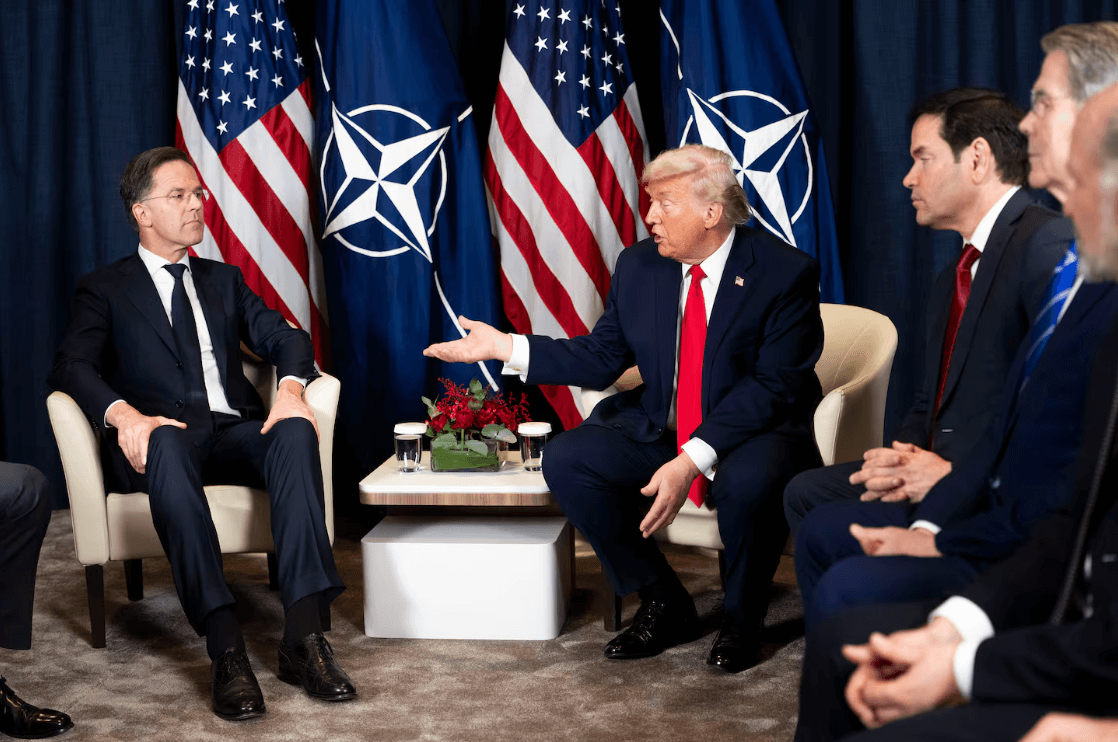
题图:北约秘书长马克·吕特(左)周三在瑞士达沃斯世界经济论坛期间会见了美国总统特朗普。图片来源:道格·米尔斯/纽约时报
附原英文报道:
As Trump drops Greenland threats, Europeans say they are still on guard
By Ellen Francis and Emily Davies The Washington Post,Updated January 22, 2026
NATO Secretary General Mark Rutte, left, meets with President Trump on the sidelines of the World Economic Forum in Davos, Switzerland, on Wednesday.DOUG MILLS/NYT
BRUSSELS — President Trump’s apparent U-turn on Greenland — proclaiming he was negotiating a deal for “total access” to the Arctic territory and dropping his tariff threats — eased some pressure in the standoff with America’s once-closest allies in Europe. But European officials said Thursday that the matter was not settled and they remain on guard.
Trump on Thursday suggested the could achieve his goals without owning Greenland, as he had previously demanded, proclaiming in an interview on Fox Business that he was brokering a deal with “no end” or “time limit” while providing little detail. “We will have everything we want,” Trump said on “Mornings With Maria.” “We’re getting everything we want at no cost.”
The president suspended his tariff threats on Wednesday after meeting with NATO Secretary General Mark Rutte at the World Economic Forum in Davos, Switzerland. Trump had declared that tariffs on eight European nations that opposed his demand for Greenland, which is an autonomous territory of Denmark, would go into effect on Feb. 1.
European officials said they expect thorny negotiations ahead with the White House touching on expanding the presence of US troops or bases in Greenland, offering the United States greater access to investment in mineral extraction, and boosting NATO efforts to secure the Arctic. Danish and NATO diplomats have presented all these issues as an off-ramp to address Trump’s grievances, in exchange for the president dropping his threats and demands for “ownership” of the territory.
One European official said that Trump’s shift appeared to be based on threats of retaliatory tariffs from the European Union and his realization that such measures were set to go into effect automatically in February, potentially raising costs for American consumers, as well as a bipartisan effort in Congress to draft language to stop him from threatening an ally’s territory.
The official who spoke on the condition of anonymity to discuss sensitive diplomacy said the Europeans “coordinating fiercely” to demonstrate their unity to Trump and that conversations with German Chancellor Friedrich Merz and Rutte were key to the president’s decision. “Rutte showed him a path to de-escalation,” the official said. “He showed him the landing zone, and he liked it.”
During the standoff, European and NATO officials stressed that there was already an agreement in place between the United States and Denmark that would allow the United States to expand its military presence in Greenland, a vast, icy, and strategically located expanse. That existing accord appeared to be at the core of Trump’s “framework.”
“There are still issues on Greenland that need to be resolved,” said a senior European official, speaking on the condition of anonymity to share internal deliberations.
The official said Trump and Rutte had agreed on “a two-track approach” on Arctic security. That includes negotiations between the United States and Denmark on their existing defense treaty, and talks within NATO on expanding the alliance’s “role in Arctic security.”
Trump’s latest announcement signaled a retreat from his aggressive bid to seize a NATO ally’s territory, which had roiled markets as the European Union weighed retaliatory measures that could have hit the services sector, in which the United States enjoys a major trade imbalance.
At Davos and around Europe, officials stunned by the head-spinning twist have sought details about what precisely was decided. A NATO spokeswoman said that Rutte did not propose a compromise of territorial sovereignty with Trump.
Danish leaders seemed to breathe a sign of relief that Trump’s swerve “took the heat out” out of the conversation — as Danish Foreign Minister Lars Loekke Rasmussen put it. He maintained, however, that the United States would not own Greenland.
European officials, who were deeply shaken by Trump’s ultimatums, warned that it was too early to let their guard down or believe the transatlantic rift is over. Many said Trump’s crusade for Greenland had caused a breach of trust that is spurring ongoing rethinking of Europe’s relationship with Washington.
Danish Prime Minister Mette Frederiksen said Thursday that NATO is “fully aware” of Denmark’s position. “We can negotiate on everything political: security, investments, economy. But we cannot negotiate on our sovereignty,” Frederiksen said.
“I have been informed that this has not been the case either,” Frederiksen added, stressing that “only Denmark and Greenland themselves” can ultimately make decisions on the territory’s future.
Rutte, as the political leader of the NATO alliance, is not empowered to negotiate transferring land from one NATO nation to another. Danish officials said earlier this week that Denmark and Greenland had also proposed a NATO mission to the territory in a meeting with Rutte.
An emergency summit of EU leaders was scheduled for Thursday evening in Brussels and would proceed as planned, officials said.
“After the back-and-forth of the last few days, let’s wait for the substantive details on what agreement is reached between Mr. Rutte and Mr. Trump,” German Vice Chancellor Lars Klingbeil told German broadcaster ZDF.
Klingbeil said he welcomed the move toward dialogue but sounded a note of caution, calling on Europeans to take broader lessons about the need to shield the continent’s economy and strengthen its defenses. “Whatever happens next,” Klingbeil warned, “One mistake must not happen now: that we in Europe sit back and say, ‘Well, everything turned out all right in the end, it’s not so bad after all.’”
The White House expressed optimism about a final agreement. “If this deal goes through, and President Trump is very hopeful it will, the United States will be achieving all of its strategic goals with respect to Greenland, at very little cost, forever,” Anna Kelly, a White House spokeswoman said. “President Trump is proving once again he’s the dealmaker in chief. As details are finalized by all parties involved, they will be released accordingly.”
Members of Trump’s Cabinet who were traveling with him in Switzerland had been scheduled to participate in an event with corporate executives on Wednesday evening, but they canceled because of the ongoing Greenland negotiations, said a person familiar with the plans who spoke on the condition of anonymity to discuss confidential scheduling decisions.
In a speech at Davos on Thursday, Merz, the German chancellor, praised Trump for backing off his threats to invade Greenland or impose new tariffs, but he delivered a rebuke of his great-powers approach to diplomacy that places national interest above allies.
Merz welcomed the US focus on Arctic security, while adding that the purpose of talks between Denmark, Greenland, and the United States must be “to agree on closer cooperation among allies.”
The Greenland standoff in recent days threw a harsh light on the risk of dependence and fueled a once-unthinkable conversation about “de-risking” from the United States — an approach the EU had kept for its ties with China.
“We’re not out of the woods,” Swedish Deputy Prime Minister Ebba Busch said on CNN. “Let’s be very clear. The last few weeks, apart from a very turbulent first year, have been very damaging for the relationship between the European Union, Europe as a whole, and the US,” she added.