
【中美创新时报2026年6月5日讯】(记者温友平编译)毕业典礼圆满结束,学生们陆续回家。然而,哈佛大学一项行政重组计划却引发了轩然大波,该计划可能导致今年夏天大规模裁员。工会成员称,哈佛大学的管理层正利用政治危机,在幕后策划裁员。对此,《波士顿环球报》记者布鲁克·豪瑟作了下述报道。
提出这项计划的文理学院领导表示,他们正试图解决预计高达3.65亿美元的结构性赤字问题,这主要是由于国会去年通过的即将生效的捐赠基金税上调以及包括延期建筑维护在内的资本支出所致。这笔赤字约占文理学院年度支出的20%,该学院负责大学的本科和博士项目。
一个特别工作组聘请麦肯锡公司就一项削减成本的方案提供咨询,这加剧了校园内的紧张局势。文理学院院长霍皮·霍克斯特拉在2025年3月的一份最新报告中写道,尽管该校长期以来存在结构性赤字,但联邦层面的财政不确定性使得采取行动变得更加紧迫。
工会成员和组织者并不认同这种说法。他们表示,哈佛大学的财务状况良好——拥有569亿美元的捐赠基金——而文理学院的管理人员却在利用政治危机,暗中策划削减开支。
“这只是一种谈判策略,他们试图用最少的钱从最少的人身上榨取最多的工作,”图书馆参考助理兼哈佛大学文职和技术人员工会成员杰夫·卡伦斯说道,该工会代表着5000多名员工。
今年,哈佛大学一直面临着来自工会的巨大压力。拥有4000名成员的哈佛研究生和博士生学生会刚刚结束了为期40天的罢工,但学生会表示,他们“争取公平合同的斗争”并未结束。
代表非终身教职教师和研究人员的哈佛学术工作者协会,在经历了数月的谈判后,因不满情绪日益高涨,正呼吁其成员投票授权罢工。与此同时,哈佛大学的后勤人员在三月份批准了一份新合同,并争取到了大幅加薪。
就连波士顿市长吴弭也卷入了工会冲突,她必须在继续按计划在哈佛法学院毕业典礼上发表演讲和取消演讲以避免越过研究生纠察线之间做出选择。她最终取消了演讲。
随着这些分歧加深,特朗普总统与哈佛大学的冲突已逐渐淡出人们的视线。今年夏天,焦点变成了哈佛大学内部的争论——韦尔斯利学院研究高等教育融资的经济学教授菲利普·莱文表示,这仍然是特朗普政绩簿上的一个亮点。“特朗普最擅长的就是煽动民众情绪。”
汉娜·默钱特是哈佛大学植物标本馆的助理馆员,也是大约800名担心自己工作可能不保的工会成员之一。她说,哈佛似乎正在利用特朗普对大学的攻击,将矛头指向自己的员工。“我的感觉就是这样……‘我们该如何削减成本,然后把责任推卸给别人呢?’”
很难想象世界上最富有的大学也会面临财务困境;哈佛大学拥有近570亿美元的捐赠基金,早已习惯了卓越和特立独行。“与大多数高校不同,哈佛大学并不习惯偶尔削减开支,”大学财务专家、哈佛大学前预算官员拉里·拉德表示,而且哈佛大学经历过的那些削减措施,相比之下都“非常温和”。
特朗普改变了这一切。
莱文表示,由于人均财富最高的院校的捐赠收益税从 1.4% 提高到 8%,哈佛大学现在每年可能需要缴纳约 3.41 亿美元的税款,尽管其他估计数字要低得多。
分级税率的计算方法是将大学的捐赠基金除以其全日制学生人数,这种税率对精英大学的影响最大。其他大学,例如耶鲁大学和麻省理工学院,也在为可能受到的影响做好准备。
哈佛大学的预算困境也反映了通货膨胀和医疗保健成本飙升的问题。文理学院约有250栋建筑亟需维修,其中一些建筑已有数百年历史。预计未来15年,每年的维修费用可能高达4亿美元。
哈佛大厅。文理学院约有250栋建筑亟需维修,其中一些建筑已有数百年历史。
哈佛大厅。文理学院约有250栋建筑亟需维护,其中一些建筑已有数百年历史。图片由哈佛文理学院通讯部提供。
莱文说,这笔钱总得从某个地方来,但这并不像从哈佛大学的捐赠基金中挪用那么简单,因为哈佛大学捐赠基金的大部分资金都限制用于特定用途,例如学生资助和科学进步。
莱文说:“必须做出选择。裁员当然令人遗憾,但他们应该关闭科学实验室吗?什么才是正确的决定?”
哈佛大学的应对措施是:为了提高效率,要求各院系和中心共享行政服务。文理学院媒体关系主任詹姆斯·奇泽姆告诉《波士顿环球报》,他表示,许多细节仍需敲定,包括哪些职位可能会受到影响;一旦最终确定,这些调整将在夏季实施。三位行政院长是首批职位被裁撤的人员之一。
他说,一年多来,文理学院一直向教职员工传达有关结构性赤字、捐赠税和不断变化的联邦资助环境的信息,并且还与工会领导人进行了会面。
在此期间,学校也一直在制定精简行政运作的计划。奇泽姆表示,除了咨询顾问之外,一个由80多名教职员工组成的特别工作组也得出结论,认为应该更新行政架构。
奇泽姆将目前的 FAS 结构比作一座殖民时代的房屋,“尽管历经岁月洗礼,依然熠熠生辉”。
“房子里的东西都能正常运转——而且这房子绝对是颗璀璨的明珠,几代家庭都曾在这里安家——但是维护和修理老旧系统的成本很高,”他说。“这限制了你在房子里能做的事情。”
尽管FAS定期发布最新消息,但文职和技术人员工会的成员表示,学校并未完全透明,也没有为其计划提供足够的财务依据。他们质疑,既然一些费用,例如建筑维修,可以分摊到几年内支付,为何现在需要如此大幅度地裁员。
组织者凯莉·巴尔巴什说:“我们谈论的费用是长期性的,很难理解为什么会如此急于裁掉很大一部分员工。”
尽管存在担忧,拉德表示,最终结果不太可能像许多人担心的那样影响深远。他指出,与麦肯锡这样的企业咨询公司合作往往成本高昂——据《哈佛深红报》报道,仅FAS的咨询费用就至少为25万美元——而且收效甚微。不过,他 补充说,这确实提供了一种向董事会表明学校认真对待成本削减问题的方式,同时也能让管理人员在宣布具体削减措施时“更具说服力”。“他们可以说:‘我对此负责,但这并非我的主意,而是咨询顾问的主意。’”
与此同时,工会举行集会抗议即将到来的裁员。
一些工作人员在哈佛大学工作了几十年。他们包括教职员工和研究助理、项目经理、在实验室工作的动物技术员,以及负责从本科生项目到注册、助学金、招生和学生宿舍等各个方面的协调员。
与教授不同,他们不享有终身教职或学术休假等特权。哈佛大学发起针对特朗普政府的公关活动时,行政人员并非大学的公众形象代表。但他们往往是学校使命的幕后守护者,负责管理植物标本馆六个植物收藏和超过500万份藻类、苔藓植物、真菌和维管植物标本的默钱特说道。
疫情初期,她仍然会去检查粘虫板,确保没有害虫会损害藏品。她指出,“策展”一词的字面意思就是“照料”。
巴尔巴什说,这些关怀和专业知识都没有体现在组织流程图中。
“这些顾问似乎每次都用同样的方案,”她说。“都是些不同版本的集中化。”
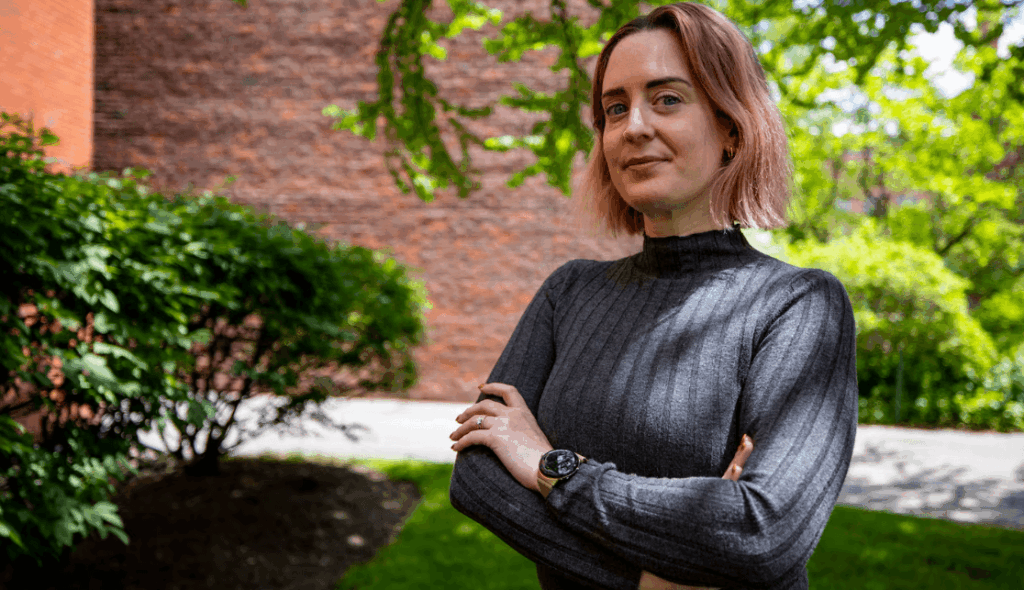
题图:汉娜·默钱特,哈佛大学植物标本馆的策展助理。克里斯蒂安·坎托斯基为《波士顿环球报》供稿。
附原英文报道:
Harvard has a $57 billion endowment. It’s still eyeing staff cuts this summer — here’s why.
Union members say Harvard managers are taking advantage of political crises to engineer cuts behind closed doors
By Brooke Hauser Globe Staff,Updated June 4, 2026
Hannah Merchant, a curatorial assistant at Harvard University Herbaria.Christian Kantosky for The Boston Globe
Commencement is a wrap, and students are going home. But at Harvard University, temperatures are rising over an administrative restructuring plan that could result in sweeping staff layoffs this summer.
Leaders of the Faculty of Arts and Sciences, which proposed the plan, say they are trying to address a projected structural deficit of $365 million, largely because of the looming endowment tax hike Congress imposed last year and capital expenses, including deferred building maintenance. That’s about 20 percent of annual spending for FAS, which houses the university’s undergraduate and PhD programs.
A task force tapped McKinsey & Company to consult on a cost-cutting model that has intensified tensions on campus. While the school has long had a structural deficit, financial uncertainties at the federal level are adding urgency to act, FAS dean Hopi Hoekstra wrote in an update in March 2025.
Union members and organizers aren’t buying it. They say that Harvard is doing fine financially — it has an endowment of $56.9 billion — and that FAS managers are taking advantage of political crises to engineer cuts behind closed doors.
“It’s just a bargaining position, and they’re trying to squeeze the most work from the fewest people for the least money,” said Geoff Carens, a library reference assistant and member of the Harvard Union of Clerical and Technical Workers, which represents more than 5,000 staff.
The university has been facing intense pressure from its labor unions this year. Working graduate and PhD students in the 4,000-unit Harvard Graduate Student Union just ended their 40-day strike, but not their “fight for a fair contract,” the student union said.
Harvard Academic Workers, which represents non-tenure-track teachers and researchers, is asking its members to vote for a strike authorization amid mounting frustration after months of bargaining. Harvard custodians, meanwhile, ratified a new contract in March and won a significant wage increase.
Even Boston Mayor Michelle Wu was drawn into a union scuffle when she had to choose between going forward with plans to be the Class Day speaker at Harvard Law School or canceling so as not to cross the graduate students’ picket line. She canceled.
As these rifts deepen, President Trump vs. Harvard has faded to the background. This summer, it’s Harvard vs. Harvard — still a point for Trump’s scorecard, said Phillip Levine, an economics professor at Wellesley College who studies higher education financing. “That’s what Trump thrives on: the ability to get people riled up.”
Hannah Merchant is a curatorial assistant at the university’s Herbaria and one of about 800 unionized employees who fear their jobs could be on the line. She said Harvard appears to be weaponizing Trump’s attacks against the university and targeting its own employees. “That’s how it’s felt to me . . . ‘How can we cut costs and blame it on someone else?’ ”
It can be hard to imagine the world’s richest university facing financial stress; Harvard, with its nearly $57 billion endowment, is used to being both exceptional and the exception. “Unlike most colleges and universities, it is unaccustomed to the occasional cost-cutting effort,” said Larry Ladd, a college finance expert and former Harvard budget officer, and the ones it has experienced have been “very mild” in comparison.
Trump changed that.
Harvard could now pay an estimated $341 million annually, Levine said, a result of the tax on endowment returns rising from 1.4 to 8 percent for institutions with the most wealth per student, though other estimates are significantly lower.
The tiered tax rate, calculated by dividing a university’s endowment by its full-time enrollment, is hitting elite schools the hardest. Others, such as Yale and MIT, are bracing for impact as well.
Harvard’s budget woes also reflect inflation and spiking health care costs. The Faculty of Arts and Sciences is staring down deferred maintenance for approximately 250 buildings, some of which are hundreds of years old. Projected expenses could cost as much as $400 million per year over the next 15 years.
The money has to come from somewhere, Levine said, but it’s not as simple as drawing from Harvard’s endowment, the majority of which is restricted for specific purposes, such as student financial aid and scientific advancement.
“Choices have to be made,” Levine said. “It is certainly unfortunate when layoffs take place, but should they close the science lab? What’s the right decision to make?”
Harvard’s answer: Asking departments and centers to share administrative services for efficiency’s sake, James Chisholm, director of media relations at FAS, told the Globe. Many details still have to be worked out, including what jobs could be affected, he said; once finalized, the changes will be put in place over the summer. Three administrative deans are among the first to see their positions eliminated.
FAS has conveyed information about the structural deficit, endowment tax, and shifting federal funding landscape to faculty and staff for more than a year, he said, as well as met with union leaders.
The school has also been working on plans to streamline administrative operations during that time. In addition to the consultants, Chisholm said, a task force that included more than 80 faculty and staff concluded that the administrative structure should be updated.
Chisholm compared the current FAS structure to a Colonial-era house that’s “still gleaming despite its years.”
“Things work — and the house is an absolute gem that generations of families have called home — but the cost of maintaining and repairing the old systems is expensive,” he said. “It limits what you can do inside the house.”
Although FAS has offered regular updates, members of the clerical and technical workers’ union say the school has not been fully transparent or provided enough financial justification for its plans. They question why such deep cuts to staff are needed now, when some costs, such as repairing buildings, can be spread over a period of years.
“It’s very hard to understand why there would be this urgent rush to slough off a huge portion of the staff when the expenses that we’re talking about are over time,” organizer Carrie Barbash said.
Despite the alarm, Ladd says it’s unlikely the result will be as extensive as many fear. Working with a corporate firm like McKinsey tends to cost a lot of money — at least $250,000 for the FAS consultation, the Crimson reported — and brings back few practical results, he said. It does, however, offer a way to signal to the board that the institution is taking cost-cutting concerns seriously while giving administrators “credibility when announcing specific cuts,” he added. “They can say: ‘I take responsibility, but it wasn’t actually my idea. It was the consultants.’ ”
In the meantime, the union has held rallies to protest upcoming layoffs.
Some staffers have worked at Harvard for decades. They include faculty and research assistants, grant managers, animal technicians who work in the labs, and coordinators for everything from undergraduate programs to registration, financial aid, admissions, and residential houses.
Unlike professors, they don’t enjoy the privileges of tenure or sabbatical. When Harvard mounted its public relations campaign against the Trump administration, administrative staff members weren’t the university’s public face. But they are often the unseen stewards of its mission, said Merchant, who helps attend to six botanical collections and more than 5 million specimens of algae, bryophytes, fungi, and vascular plants at the Herbaria.
After the pandemic first struck, she still went in to check sticky pest-control traps for bugs to make sure none could harm the collections. The word “curate,” she noted, literally means “to care for.”
None of that care or expertise is reflected on organizational flow charts, Barbash said.
“All of these consultants seem to have the same plan every time,” she said. “It’s all just various versions of centralizing.”

